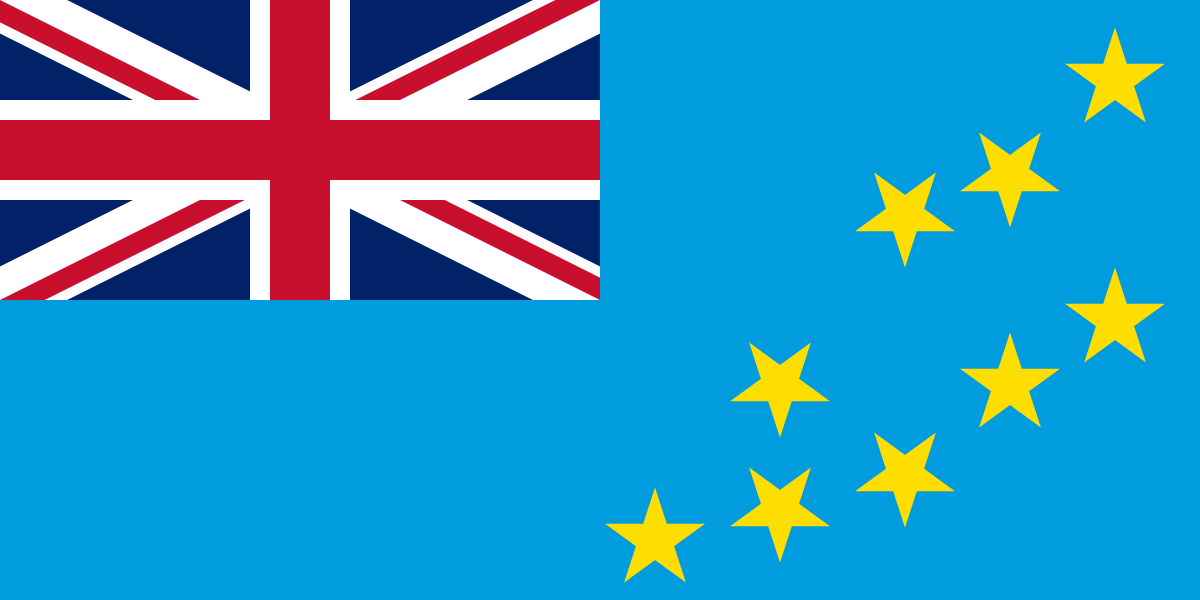
Tuvalu
3% · StableUnlikely: Tuvalu has a very low probability of direct involvement in significant armed conflict in the next three years, with risk mainly contingent on a major Indo-Pacific war expanding into the central Pacific.
**Core judgment** Tuvalu’s direct war-involvement risk remains extremely low: it has no armed forces, minimal strategic infrastructure, and strong external…
Tuvalu is likely to remain calm with very low political violence risk. The main security demands will be disaster preparedness and maritime domain awareness. Taiwan-recognition dynamics may sustain diplomatic pressure and raise cyber/information-operation exposure, but escalation to kinetic force is unlikely. Any maritime incidents are most likely to be contained law-enforcement encounters with partner support.
Over five years, climate impacts, fiscal strain, and emigration could erode administrative capacity and increase vulnerability to cyber disruption and transnational crime facilitation. Strategic competition may intensify alignment pressure, but Tuvalu’s lack of armed forces and the Australia-centered assistance/deterrence architecture should keep direct war involvement unlikely unless a major Indo-Pacific conflict expands into the central Pacific.
Net assessment Tuvalu’s three-year likelihood of direct involvement in significant armed conflict remains remote. The state has no standing military and limited coercive capacity, which sharply reduces both initiation and escalation pathways. Most plausible security shocks are conflict-adjacent (cyber disruption, coercive diplomacy, maritime law-enforcement incidents) rather than sustained combat.
Threat drivers Indo-Pacific strategic competition is the only credible external channel for Tuvalu to be pulled toward conflict. Tuvalu’s continued diplomatic recognition of Taiwan, and reporting of a formalized deepening of ties, can increase exposure to political pressure, influence operations, and cyber targeting. These tools are typically calibrated to stay below armed conflict thresholds, especially against microstates where coercion-by-cost-imposition is cheaper than force. Maritime risks persist structurally: illegal fishing and transnational crime facilitation can generate at-sea encounters. For Tuvalu, these are more likely to be handled as fisheries enforcement and policing problems, often with partner support, limiting escalation. Climate stress remains the dominant national security burden. It can amplify governance strain and critical-infrastructure fragility, but it more commonly produces humanitarian and administrative crises than organized armed violence.
Resilience and systemic firebreaks Tuvalu’s demilitarized posture is the primary firebreak: there is no indigenous force structure to conduct or sustain combat operations, and no domestic armed factions. External partnerships further reduce war exposure. Australia’s Falepili Union framework and broader regional security cooperation increase deterrence, provide rapid assistance in contingencies, and reduce incentives for Tuvalu to militarize. U.S. and regional engagement on maritime surveillance also biases outcomes toward managed incidents rather than escalation. Governance indicators and security reporting align with low political violence and terrorism risk.
Most plausible conflict pathway (still low probability) A material risk increase would require a major regional war in which small-island air/port access, ISR, or logistics become operationally salient, creating pressure for access, denial, or coercive seizure. Even then, Tuvalu is more likely to experience indirect effects (cyber disruption, economic coercion, information operations) than direct kinetic fighting.
Support the Project
WarRiskIndex is a public-good initiative. Your contribution powers AI analysis.