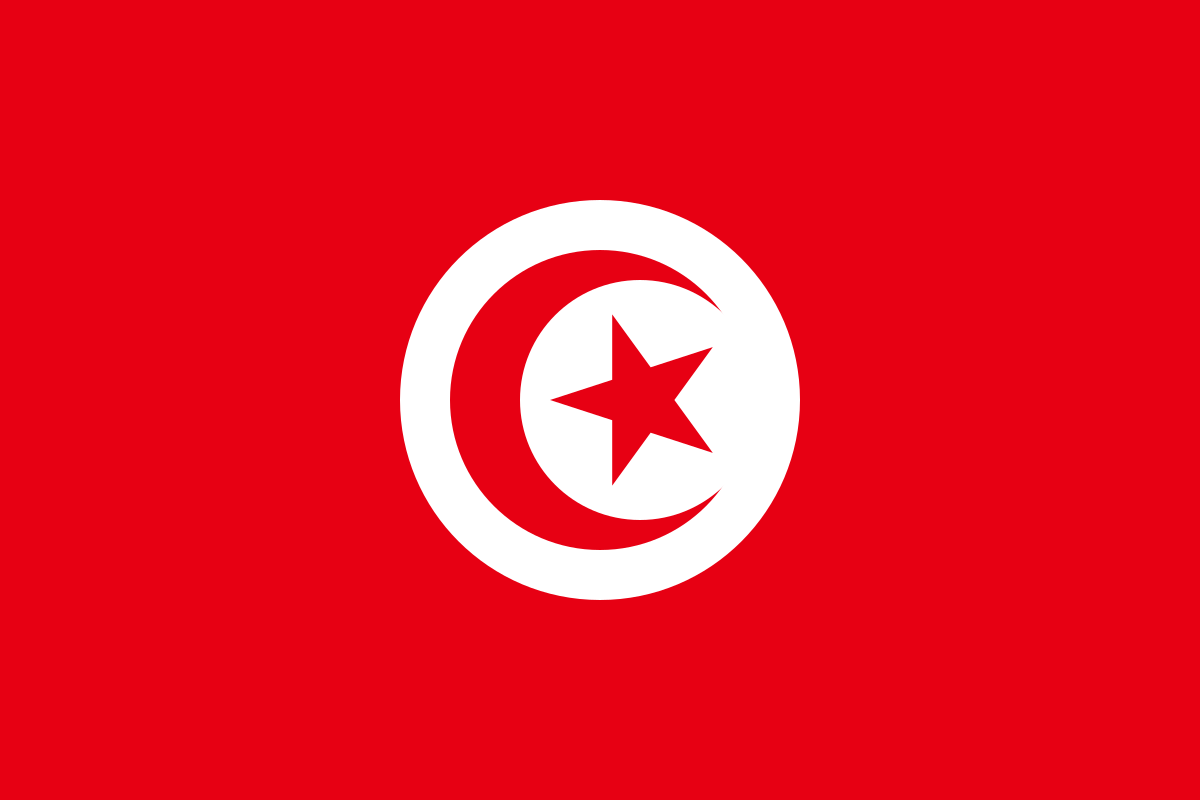
Tunisia
26% · Elevated RiskTunisia is unlikely (roughly one-in-four) to be directly involved in significant armed conflict within the next three years, with the main risk concentrated in severe internal political-economy rupture or a major Libya-driven security spillover rather than interstate war.
**Assessment** Risk remains in the upper-unlikely band
Most likely trajectory is heightened political tension and episodic street violence amid economic strain and continued emergency-rule tools (arrests, protest restrictions). Terrorism risk remains localized and opportunistic rather than insurgent. The main acute security contingency is a Libya-border incident (infiltration, smuggling violence, or an attempted attack) producing short-duration clashes and temporary movement restrictions, not sustained warfare.
Over five years, risk rises if debt distress forces abrupt subsidy cuts and prolonged shortages while political channels for bargaining remain constrained, increasing the chance of recurring violent unrest and heavier security responses. Even then, the modal outcome is chronic instability with intermittent violence, not civil war, given state coercive dominance and limited armed-opposition capacity. Interstate war remains structurally unlikely absent a major Libya rupture.
Scope and definition This estimates the probability of significant armed conflict involving Tunisia within three years: sustained internal fighting approaching civil-war intensity, or direct interstate war involving Tunisian forces beyond routine border incidents. It excludes protests, episodic terrorism, and ordinary policing.
Threat drivers The dominant risk channel remains political-economy strain under a prolonged state of exception and tighter executive control. This combination can convert subsidy/price shocks, shortages, or labor conflict into larger confrontations, with a higher risk of lethal crowd-control incidents and localized violent escalation. However, moving from unrest to significant armed conflict still requires a step-change: emergence of organized armed actors able to sustain operations, or a breakdown in security-force cohesion.
Terrorism risk persists but remains structurally constrained. Available indicators and partner reporting continue to align with small-cell or lone-actor violence and periodic border/mountain security operations rather than an insurgency capable of holding territory.
Externally, Libya remains the principal contingency. Smuggling networks, armed-group movement, and sudden instability in western Libya can generate cross-border incidents and short, sharp clashes in the southeast. A single serious attack near the border would raise near-term volatility, but it does not by itself imply a durable armed contest unless repeated and coupled with domestic governance breakdown.
Resilience and systemic firebreaks Tunisia retains nationwide administrative reach and a security apparatus optimized for internal security, counterterrorism, and border defense. The armed forces remain comparatively professional and defensive in orientation, with modernization focused on surveillance, mobility, and rapid response rather than power projection.
External partners (notably European states and the US) have durable incentives to sustain Tunisian border, maritime, and counterterrorism capacity due to migration and regional security priorities, reinforcing state capability even amid political backsliding.
Net assessment and calibration New reporting supports elevated repression/unrest pressure and continued Libya-border sensitivity, but does not establish a credible pathway to sustained armed contestation or interstate war. Slight upward drift from the baseline is warranted due to prolonged emergency governance and episodic border-attack risk: 0.26 (unlikely).
Support the Project
WarRiskIndex is a public-good initiative. Your contribution powers AI analysis.