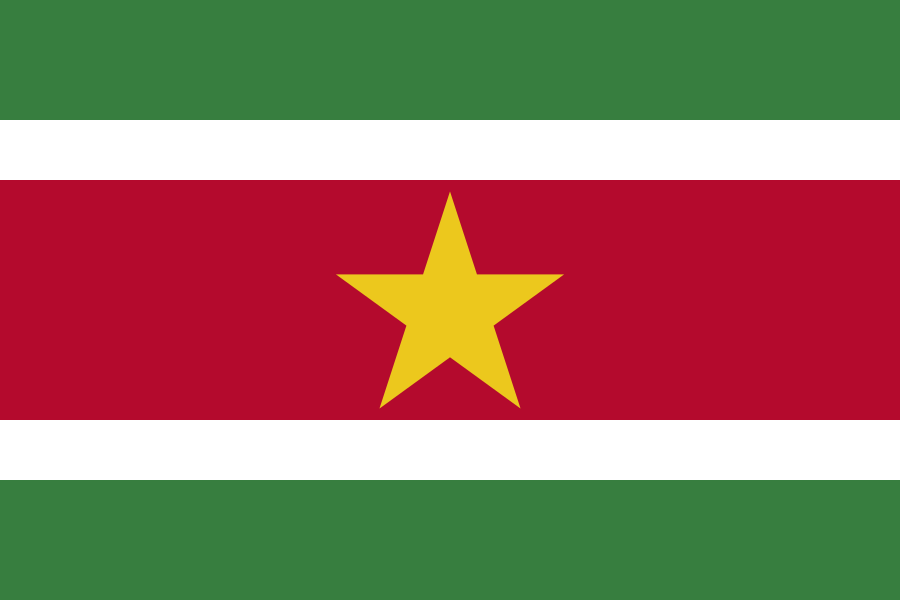
Suriname
6% · StableSuriname’s probability of direct involvement in significant armed conflict in the next three years is low, around 6% (unlikely).
**Bottom line** Risk stays low because Suriname lacks strong interstate drivers and has no active insurgency
Most likely: trafficking-linked violent crime, illegal mining disputes, and episodic protests tied to austerity, prices, or corruption allegations. Interior and border coverage gaps will persist, raising the chance of localized armed incidents involving police or military patrols. Regional Venezuela-related tensions may increase vigilance and maritime friction, but sustained armed conflict remains unlikely.
The main swing factor is whether oil development strengthens institutions or accelerates corruption, criminal capture, and distributional conflict. A negative path could increase armed criminal violence around ports, logistics, and the interior mining belt, but would still more likely remain below the civil-war threshold. Interstate conflict risk rises mainly under a severe Venezuela-driven regional rupture affecting maritime security and borders.
Scope and threshold This estimates the probability by end-2029 of Suriname’s direct involvement in significant armed conflict: sustained interstate combat involving Surinamese forces, or sustained organized armed conflict between the state and an armed group. Crime waves, riots, and brief border or maritime incidents are excluded.
Threat drivers The primary risk channel remains criminal-governance stress in the interior and along riverine borders: cocaine transit, arms flows, illegal gold mining, and corruption that weakens state presence. OSAC reporting continues to emphasize limited mobility and assets outside Paramaribo, which increases the chance of armed encounters around mining zones and remote crossings. These dynamics can raise lethality and local coercion but still do not resemble civil war: there is no durable rebel governance, coherent political program, or sustained recruitment pipeline.
A secondary channel is regional spillover from Venezuela-centered instability and wider Caribbean security competition. Even if regional postures harden, Suriname is more exposed to indirect effects (route displacement, maritime insecurity, intelligence and cyber activity) than to direct kinetic involvement. Guyana’s heightened border readiness underscores regional vigilance, but it does not by itself create a pathway to Suriname entering a war.
Resilience and systemic firebreaks Suriname’s small, internally oriented security forces reduce both escalation capacity and the likelihood of being treated as a primary military actor. Institutional constraints remain real, but recent years show improved protest policing and external training support, lowering the chance that unrest escalates into sustained armed confrontation.
Macro indicators from the World Bank governance and stability series remain broadly consistent with a low-conflict baseline: governance weaknesses elevate crime and corruption risks, but not a clear shift toward organized armed conflict. The expected offshore oil upside increases the opportunity costs of war for elites and raises incentives to keep disputes managed.
Net assessment New material adds noise (cyber-espionage reporting and regional alert postures) but does not show structural rupture toward insurgency or interstate war. Maintain a low 6% three-year probability.
Support the Project
WarRiskIndex is a public-good initiative. Your contribution powers AI analysis.