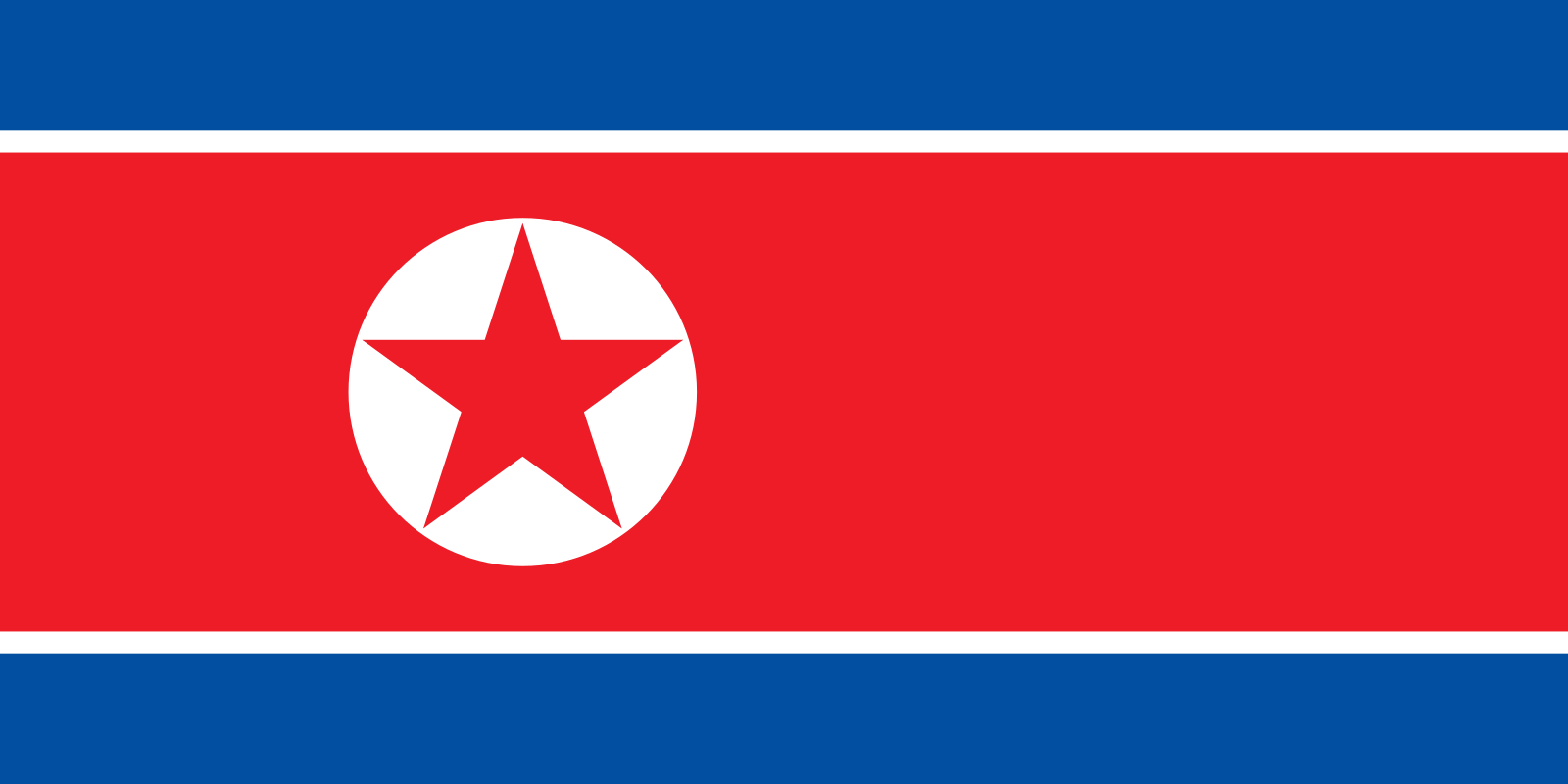
North Korea
28% · Elevated RiskNorth Korea is unlikely to enter a significant armed conflict in the next three years, but the risk remains material and is concentrated in short-warning escalation from DMZ/NLL boundary incidents or crisis miscalculation rather than deliberate war initiation.
**Net assessment** Risk stays elevated but bounded
Most likely: continued missile testing, nuclear signaling, cyber revenue operations, and selective gray-zone pressure while avoiding sustained combat. Highest near-term conflict risk comes from a DMZ/NLL incident (shots exchanged, casualties) that escalates over days due to retaliation logic and weak risk-reduction channels. DPRK-Russia cooperation may marginally raise operational confidence, but deterrence and regime-survival incentives still favor controlled provocation.
Over five years, risk could rise if DPRK gains meaningful conventional strike, ISR, or C2 improvements via external support and operational learning, increasing confidence in limited attacks. Countervailing forces remain strong: allied ISR/strike and missile defense improvements, China’s stability preference, and DPRK’s fear of regime-ending escalation. Net: major war remains below even odds, but crisis spikes from boundary incidents and coercive signaling persist.
Scope and definition Significant conflict means multi-day lethal clashes with sustained conventional force across the DMZ or NLL, direct attacks on ROK/US/Japan forces or territory, or any nuclear use. Missile tests, cyber operations, propaganda, and isolated skirmishes do not qualify unless they trigger sustained kinetic exchanges.
Threat drivers Boundary-management risk remains the dominant trigger. Persistent military activity near the DMZ/MDL and maritime contestation around the NLL create repeated opportunities for misidentification, overreaction, or tit-for-tat dynamics that can outrun political control, especially when communications and confidence-building measures are weak.
Strategic hostility is more institutionalized. Pyongyang’s hardened “two hostile states” framing and normalization of coercive signaling reduce the political cost of controlled friction and narrow crisis off-ramps.
External enablement modestly increases risk at the margin. The U.S. Intelligence Community assesses DPRK support to Russia (munitions, missiles, and troops) and continued cyber-enabled revenue generation that funds military development. This can improve select capabilities and confidence for limited provocations, but it does not, by itself, indicate intent for peninsula-scale war.
Resilience and systemic firebreaks (pre-mortem: why peace can hold) Deterrence remains structurally strong. US-ROK escalation dominance and the regime’s survival calculus make deliberate initiation of a major conventional war highly unattractive.
Operational constraints persist. Sustainment limits, exposure of fixed assets, and the high probability of rapid allied suppression incentivize calibrated, deniable, or time-limited actions rather than sustained combat.
Third-party dampeners still matter. China’s core interest is preventing war, refugee flows, and accelerated regional militarization; Russia benefits from distraction but has incentives to avoid uncontrolled escalation that could trigger major US reinforcement.
Net assessment and calibration New evidence supports holding the baseline broadly steady: elevated risk driven by accident and crisis dynamics, not a planned DPRK offensive. The probability is best characterized as possible but not likely over three years, with risk spiking episodically around exercises, drone/airspace incidents, maritime encounters, or leadership signaling cycles.
Support the Project
WarRiskIndex is a public-good initiative. Your contribution powers AI analysis.