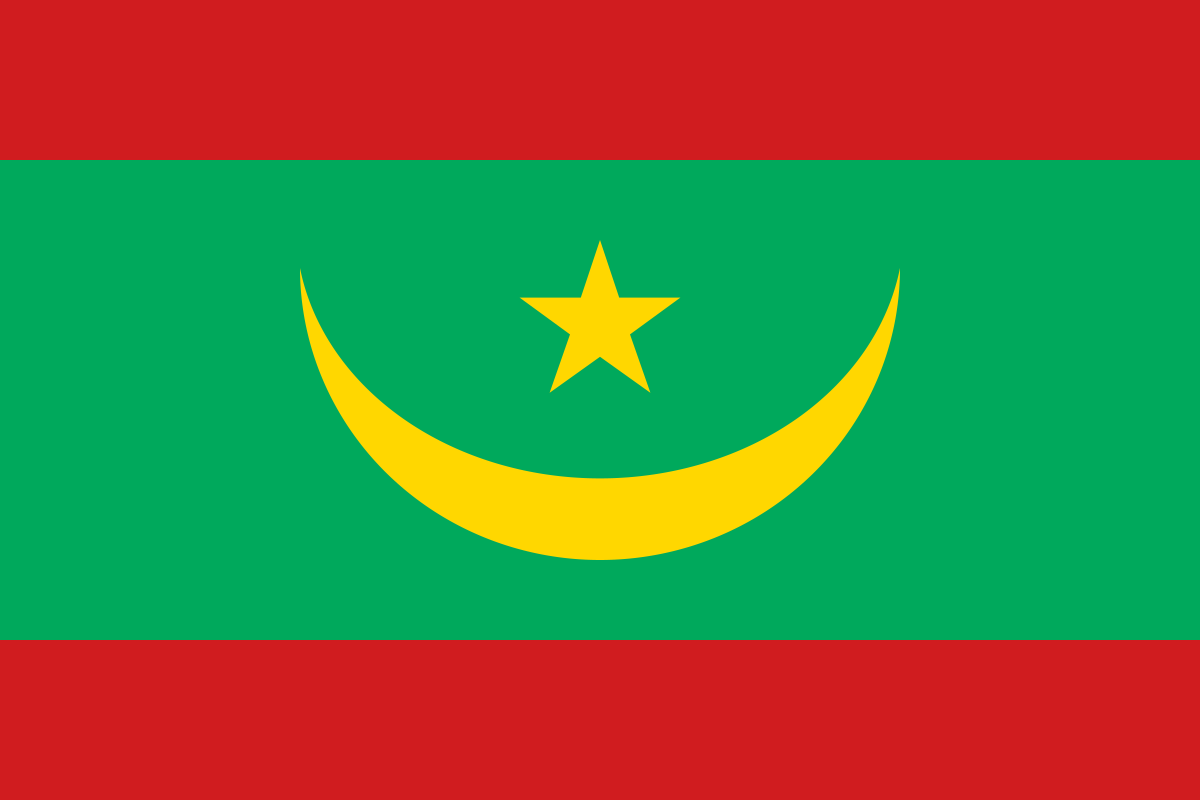
Mauritania
22% · Low RiskUnlikely (roughly one-in-five) that Mauritania will be directly involved in significant armed conflict within the next three years, with risk concentrated in localized Sahel spillover rather than nationwide war.
**Bottom line** Mauritania’s main exposure remains Sahel spillover from Mali (militants, trafficking, refugee pressure), not interstate war or a…
Risk stays low-to-moderate and geographically concentrated near the Mali frontier. Expect more preventive deployments, intelligence-led arrests, and occasional border incidents. The main near-term escalator is a deterioration in western Mali (Kayes/Nioro axis) that increases cross-border raids or ambushes. A single high-profile attack is plausible; sustained nationwide conflict remains unlikely.
Over five years, the direction depends on Sahel trajectories and domestic governance. If Mali’s fragmentation persists and trafficking routes intensify, Mauritania’s tail risk rises toward a more sustained border campaign and heavier militarization of the southeast. If regional coordination improves and Nouakchott sustains inclusive development in frontier areas, risk can revert toward a low baseline despite chronic regional instability.
Security situation Mauritania sits on the western edge of the Sahel conflict system. The most plausible pathway to “significant armed conflict” is sustained armed violence in the southeast linked to Mali’s instability: cross-border raids, attacks on security posts, and escalation around trafficking corridors. Interstate war remains a low-likelihood scenario; Mauritania has limited expeditionary posture and no acute territorial casus belli.
Threat drivers Mali’s security deterioration and governance repression increase spillover risk by enabling armed group mobility, recruitment, and criminal financing near Mauritania’s frontier. Regional reporting highlights persistent asymmetric violence and cross-border movement across West Africa and the Sahel. Climate stress and local resource competition can amplify recruitment and communal tensions, raising the odds that a discrete border incident becomes a recurring pattern. Refugee inflows and humanitarian strain are a secondary accelerator: they can stress services and create friction, but do not mechanically translate into organized armed conflict.
Resilience and systemic firebreaks Mauritania’s security model prioritizes preemption: intelligence penetration, forward deployments, and selective development-security programs in vulnerable border zones. Plans to expand deployments near the Mali border indicate anticipation and deterrence rather than imminent loss of control. Geography remains a structural buffer (low population density, long approaches, Atlantic outlet), raising the cost for militants to hold terrain. Diplomatically, Nouakchott hedges across partners and avoids deep alliance entanglement that could drag it into external wars.
Net assessment New evidence mostly reinforces the baseline: the regional threat environment is worsening, but Mauritania is responding with defensive posture and retains strong containment advantages. The three-year risk is best assessed as Unlikely, with a meaningful tail risk of a sustained border campaign if Mali’s western regions further destabilize or if security cohesion fractures domestically.
Key signposts Repeated successful attacks inside Mauritania (not just at the border), evidence of durable recruitment networks, security-force factionalism, or a sharp surge in communal violence tied to trafficking and resource stress.
Support the Project
WarRiskIndex is a public-good initiative. Your contribution powers AI analysis.