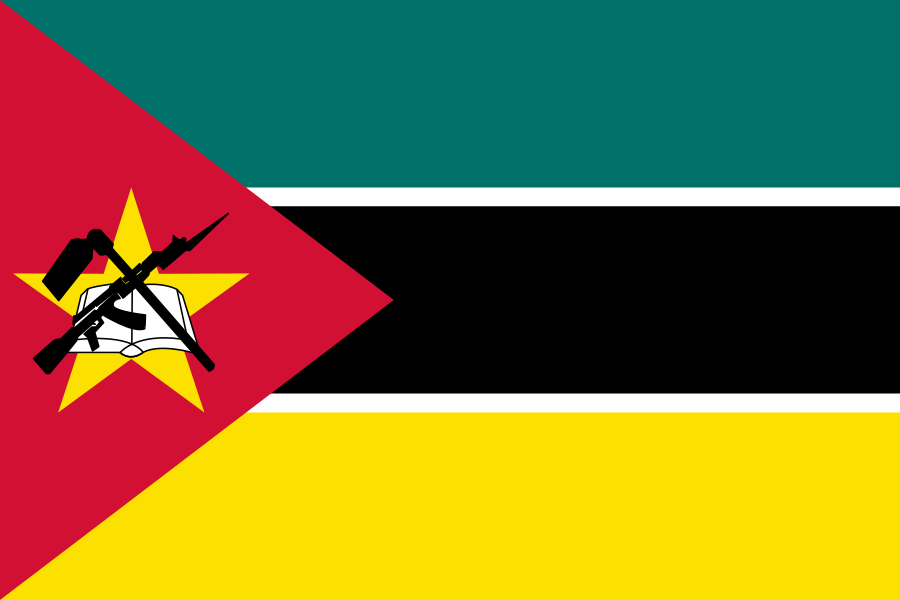
Mozambique
62% · High TensionLikely (around 60%) that Mozambique will remain directly involved in significant armed conflict over the next three years, driven primarily by the Cabo Delgado insurgency and episodic political violence rather than interstate war.
**Bottom line** Mozambique’s three-year conflict risk remains elevated and primarily internal
Violence is likely to remain concentrated in Cabo Delgado and adjacent northern districts, with intermittent spikes (IEDs, ambushes, raids) and continued displacement. The restart of LNG activity will increase the value of corridor and site security, incentivizing sustained Rwanda-backed protection. A sharp near-term deterioration would most likely come from insurgent expansion into new districts or a major political crackdown triggering wider unrest.
Over five years, outcomes hinge on whether “clear-hold-build” governance follows security operations and whether displacement and livelihoods stabilize. If LNG revenues and donor programs translate into local services and credible accountability, conflict intensity can trend down to a chronic but lower level. If governance remains extractive and security remains externally dependent, a protracted insurgency with periodic geographic spillover remains plausible.
Security situation Mozambique already sits inside an active armed-conflict system in the north. Recent reporting indicates insurgent capability to sustain attacks, contest movement corridors, and periodically strike near district towns and coastal routes, with spillover into parts of Nampula. This keeps the baseline for “significant armed conflict” high even if Maputo and major southern cities remain stable.
Threat drivers The dominant driver is the Cabo Delgado insurgency’s resilience: mobility, asymmetric tactics (IEDs/ambushes), and exploitation of weak administration and displacement. A secondary driver is political coercion after the 2024 elections: lethal crowd-control, arbitrary arrests, and targeted killings of opposition figures increase the risk of armed reprisals, militia activity, or heavier-handed security operations that raise lethality. A tertiary driver is capacity strain: Mozambique’s forces remain small and under-resourced, and the drawdown/limits of multilateral deployments increase reliance on a narrower set of partners.
Resilience and systemic firebreaks The state retains continuity and international recognition; there is no credible interstate threat environment, and Mozambique has limited alliance entanglement that would pull it into external wars. The most important stabilizer is external security assistance, especially Rwanda’s continued deployment under a formalized framework, plus EU/partner training. Economic incentives to secure LNG projects create sustained elite and partner focus on defending key nodes and corridors, reducing the probability of nationwide collapse even if rural insecurity persists.
Net assessment New evidence supports a modest upward adjustment versus a “contained insurgency” narrative: violence has shown renewed intensity and wider dispersion, while political repression adds a separate instability channel. Still, the modal outcome is continued subnational conflict concentrated in the north and along key routes, not a full civil war or interstate conflict.
Support the Project
WarRiskIndex is a public-good initiative. Your contribution powers AI analysis.