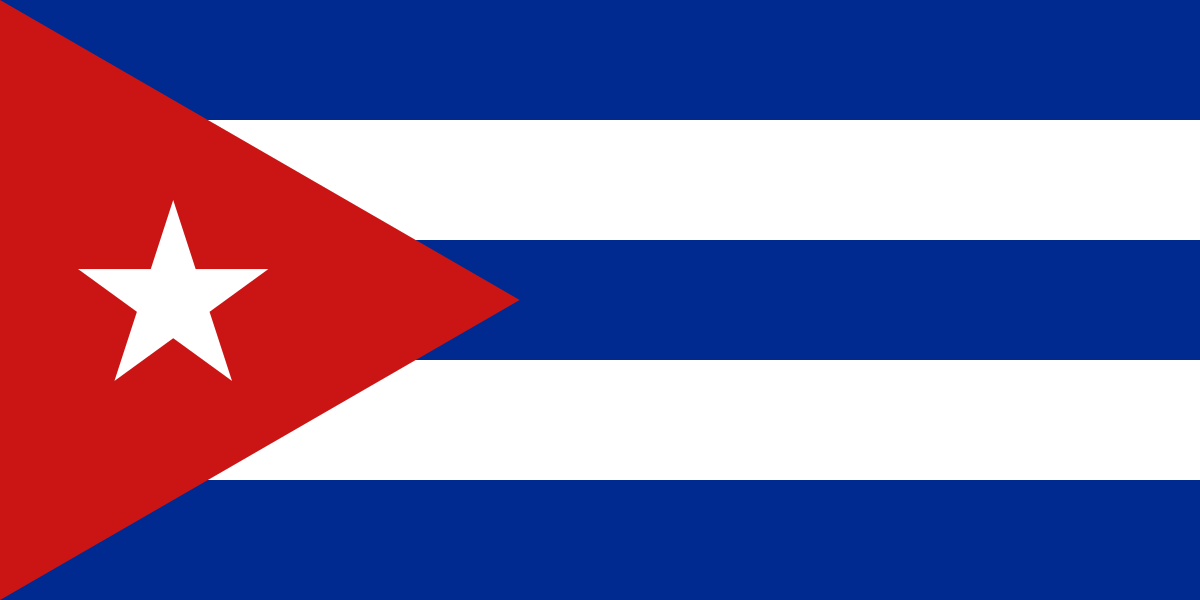
Cuba
18% · Low RiskUnlikely: Cuba has a low-to-moderate chance of direct involvement in significant armed conflict within three years, with risk concentrated in a U.S.-Cuba escalation triggered by acute internal instability or a major provocation rather than deliberate Cuban power projection.
**Bottom line** Cuba’s baseline is defensive and geographically constrained; it lacks credible expeditionary capacity and has strong incentives to avoid a…
Most likely trajectory is continued economic coercion, diplomatic confrontation, and episodic protests, with security forces retaining cohesion. Kinetic conflict remains unlikely but tail risk rises if maritime interdiction, embassy security incidents, or evacuation planning accelerates. Watch for sustained nationwide unrest, defections within MININT/FAR, or repeated armed incidents near U.S. facilities/territorial waters.
Over five years, risk depends on whether economic deterioration forces a political transition or hardens repression. A managed transition could reduce interstate risk; a chaotic succession or state breakdown could raise the probability of external intervention, armed criminality, and localized violence. Great-power alignment rhetoric may intensify, but Cuba’s structural limits still constrain sustained external warfare.
Net assessment Cuba’s three-year conflict risk is driven less by Cuban intent than by exposure to U.S. coercive policy, economic strangulation dynamics, and the possibility that internal instability produces a security spiral. The most plausible “significant armed conflict” pathway is a limited U.S.-led kinetic action (strikes, raids, or clashes during interdiction/evacuation) rather than a conventional interstate war.
Threat drivers The external environment has hardened: U.S. executive actions framing Cuba as a national security threat, expanded sanctions tools targeting energy flows, and heightened regional enforcement posture increase the probability of confrontation through incidents and brinkmanship. Cuba’s deep economic stress (energy shortages, blackouts, shortages) raises the chance of mass unrest; if the regime responds with heavy repression, it could trigger further external pressure and crisis instability. Cuba’s security ties with Russia/China raise political salience in Washington, but do not automatically translate into Cuban kinetic involvement.
Resilience and systemic firebreaks Geography favors defense and complicates invasion; Cuba’s doctrine emphasizes territorial denial and mobilization, which raises costs for any attacker and therefore strengthens deterrence against large-scale war. Cuba’s limited power-projection capability, degraded economy, and priority on regime survival reduce incentives for external adventurism. Persistent diplomatic channels on migration and consular issues, plus regional aversion to a Caribbean war, act as de-escalatory buffers. Even under severe sanctions, most escalation remains economic, legal, and informational rather than kinetic.
Key signposts Sustained large-scale protests with security-force fragmentation; repeated violent incidents at/near diplomatic facilities; U.S. maritime interdiction that produces casualties; credible evidence of foreign basing that changes U.S. threat perceptions; or a rapid humanitarian collapse prompting evacuation operations.
Conclusion Risk is elevated versus a “normal” Caribbean baseline due to U.S.-Cuba confrontation and internal fragility, but significant armed conflict remains less likely than continued coercion, unrest, and episodic low-level incidents.
Support the Project
WarRiskIndex is a public-good initiative. Your contribution powers AI analysis.